
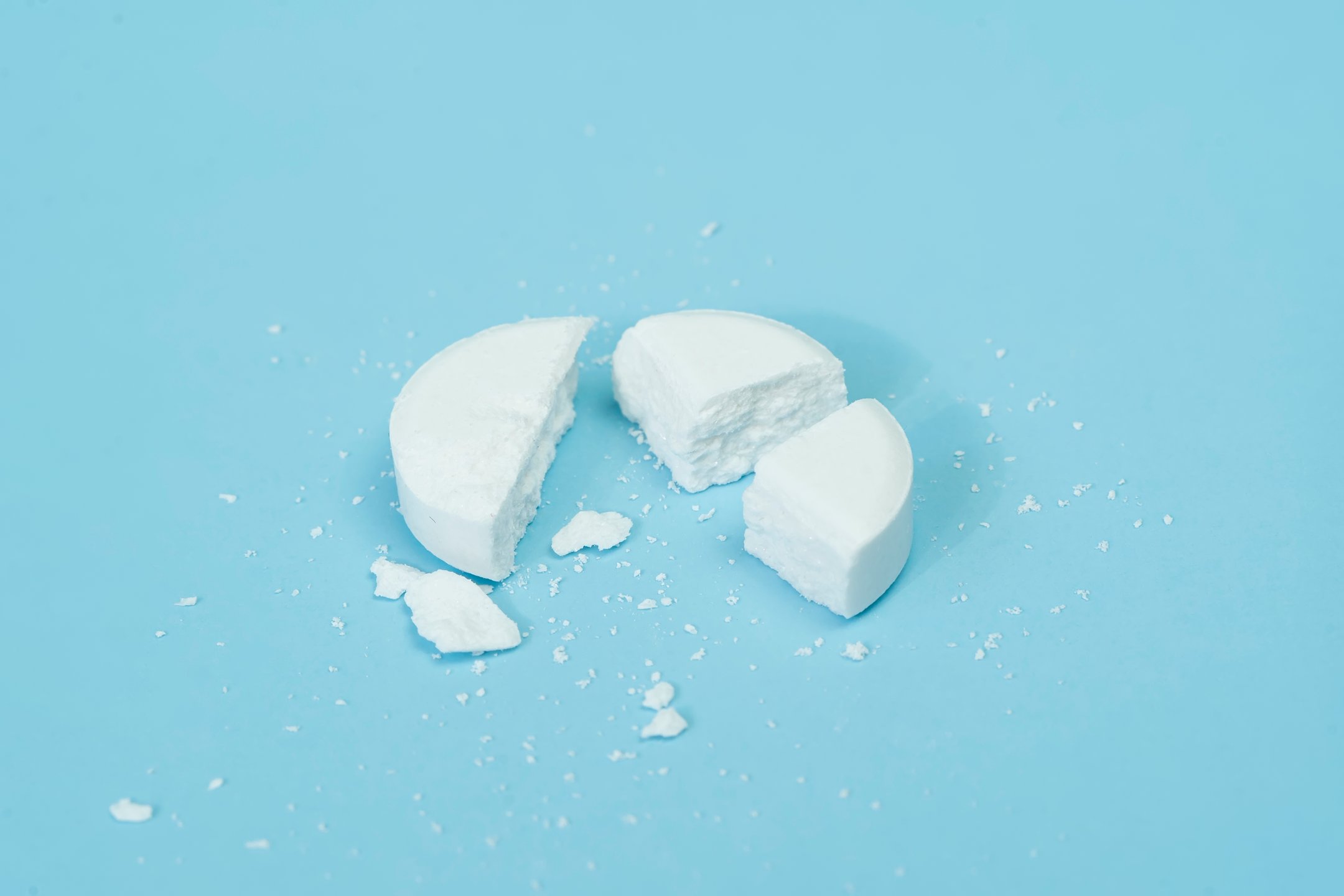
For decades, hospital pharmacies have relied on a simple workaround when commercial low-dose formulations don't exist: split the tablet. Halve it. Quarter it. Give the patient what they need. It's a practice so common that few stop to ask whether it actually delivers the dose on the label.
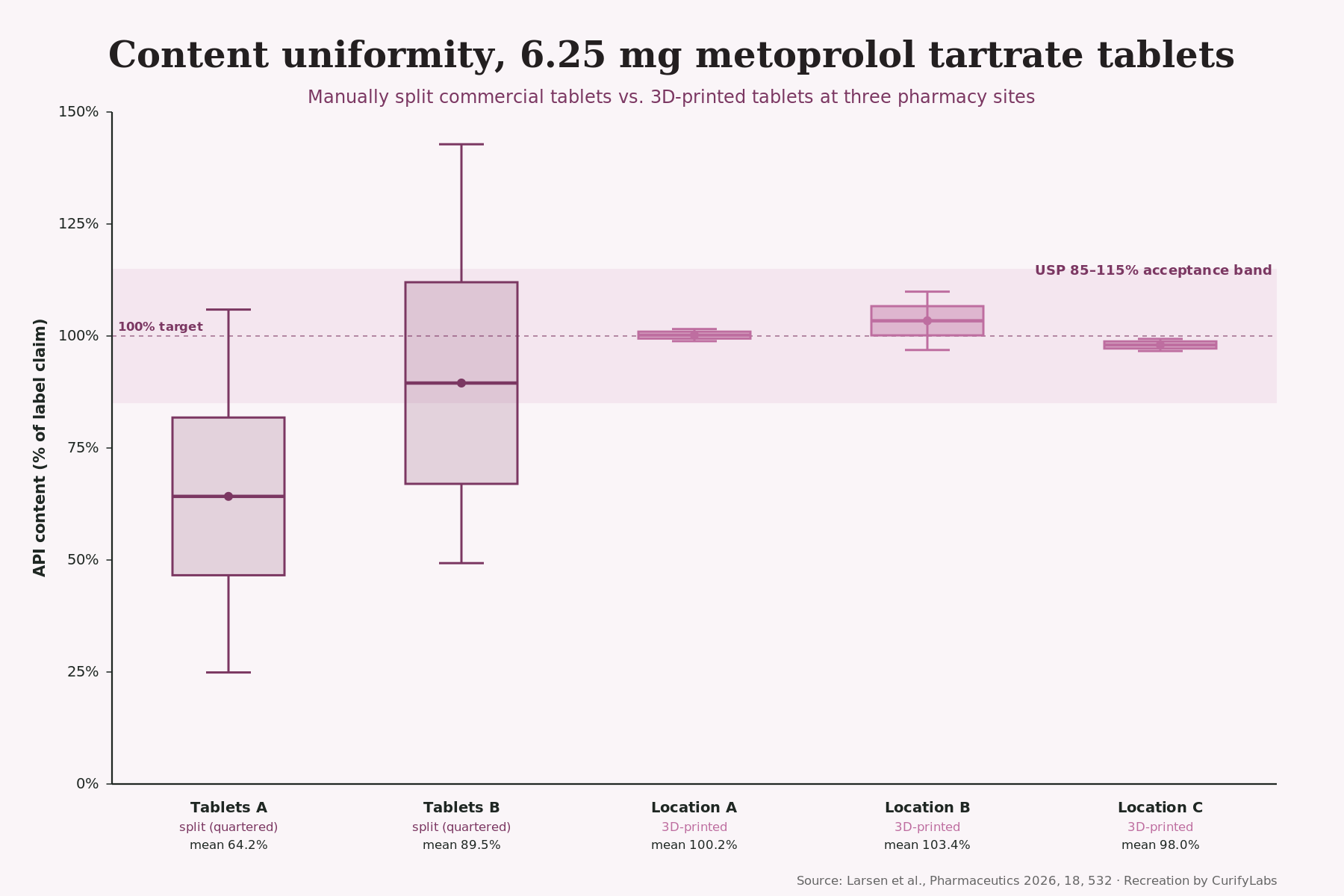
A new peer-reviewed study published in Pharmaceutics on 27 April 2026 puts a hard number on that question, and the answer should give every clinician pause. In a head-to-head comparison conducted with Mayo Clinic and CurifyLabs, manually quartered 6.25 mg metoprolol tartrate tablets contained as little as 24.9% and as much as 142.8% of the labelled active ingredient. For a drug with a narrow therapeutic index used in heart failure, hypertension, and pediatric titration, that is not a rounding error. That is the difference between an effective dose and a clinically meaningful underdose, or between a safe dose and bradycardia.
What the study did
Christine Larsen at Mayo Clinic and the CurifyLabs scientific team, led by corresponding author Niklas Sandler, designed a direct comparison between two production pathways for low-dose metoprolol tartrate. On one side, commercial 25 mg tablets from two manufacturers were manually split into 12.5 mg halves and 6.25 mg quarters at Mayo Clinic following established hospital protocols. On the other side, the same dose strengths were produced via semi-solid extrusion 3D printing using the CurifyLabs Compounding System, with the Pharma Printer and CuraBlend® excipient bases, at three decentralised sites: two hospital pharmacies and a compounding pharmacy.
Every batch was assessed against USP <905> criteria for content uniformity and mass variation, with API content quantified by validated HPLC.
.jpeg?width=555&height=740&name=Image%20(3).jpeg)
What the data showed
The split tablets struggled across the board. Tablets from Manufacturer A averaged just 64.2% API content as quartered 6.25 mg units and 66.6% as halved 12.5 mg units, with the latter result pointing to systematic underdosing rather than random scatter. Tablets from Manufacturer B fared somewhat better on the mean but exhibited extreme variability, with 6.25 mg quarters spanning 49.3% to 142.8% of label claim. Around six in ten quartered tablets exceeded the ±10% pharmacopeial mass deviation limit.
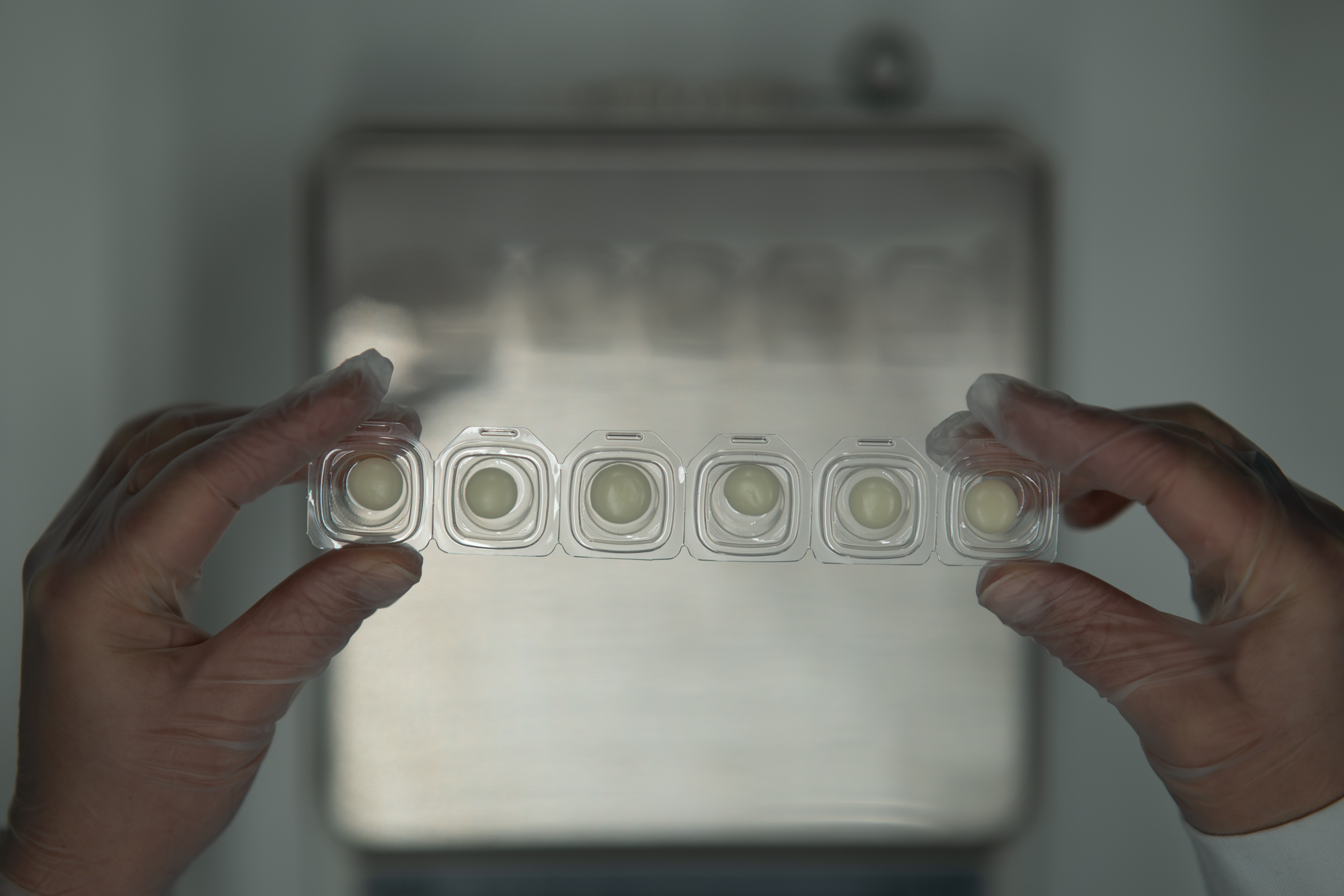
The 3D-printed tablets told a different story. Across all three production sites and both excipient bases, mean API content stayed within 90 to 103% of target, standard deviations were below 5%, and acceptance values stayed under 15, comfortably inside USP limits. The CuraBlend® gel tablet base in particular delivered tightly clustered results, with several batches showing standard deviations under 1% and acceptance values as low as 1 or 2.
A one-way ANOVA across the five groups confirmed what the boxplots already made obvious: the differences between split and printed tablets were highly statistically significant, and Games–Howell post hoc testing placed every 3D-printed group inside the pharmacopeial 85 to 115% window while every split-tablet group either failed it outright or only narrowly cleared it.
Why this matters beyond a single molecule
Metoprolol tartrate is a useful test case precisely because it is unglamorous. It is generic, ubiquitous, and prescribed millions of times a year. If a workhorse cardiovascular drug cannot be reliably split into clinically required low doses, the implication for narrow-therapeutic-index medicines more broadly is uncomfortable. The FDA has already warned that only tablets specifically designed and tested for splitting should be considered for that practice, and prior literature reaching back to Polli and colleagues has flagged the same uniformity problem. What changes now is that a credible alternative has been demonstrated to work, on real hospital floors, in the hands of pharmacy staff, with documented reproducibility across decentralised sites.
That last point is the one we keep coming back to inside CurifyLabs. The accuracy is the headline. The reproducibility across locations is the story. A compounding system is only useful if the quality result is the same in Rochester, Helsinki, or anywhere else a hospital pharmacy puts it on the bench. Three sites, two formulation bases, all within spec.
What this study does not claim
We want to be precise about scope, because the authors were. The study is an analytical comparison, not a clinical trial. It does not measure patient outcomes, cost-effectiveness, or workflow integration. Each printed condition was evaluated as a single batch, so within-batch variability is what the numbers describe; multi-batch and multi-operator replication remains important future work. The conclusions apply to the CurifyLabs ecosystem as tested and should not be over-generalised. Clinical, operational, and economic studies will need to follow.
Where we go from here
For us, this paper is a milestone, not a finish line. The case for moving low-dose, narrow-therapeutic-index compounding from manual splitting to validated automated production is now supported by data generated alongside one of the world's leading academic medical centres. The next questions are the harder ones: how does this integrate into daily pharmacy operations, how does it affect prescribing behaviour for paediatric titration and heart failure dose escalation, and how do we build the evidence base that lets health systems adopt it with confidence?
We are grateful to the team at Mayo Clinic for the partnership and to our co-authors Christine Larsen, Farnaz Shokraneh, Julius Lahtinen, Mahsa Bahman, Laura Mantila, Ludmila Hrižanovská, and Niklas Sandler for the work behind these results.
Behind the scenes @Mayo Clinic
The full open-access paper is available in Pharmaceutics: Larsen et al., Dose Accuracy and Content Uniformity of Low-Dose Metoprolol Tablets: 3D Printing Compared with Tablet Splitting in Hospital Pharmacy Setting, Pharmaceutics 2026, 18, 532. https://doi.org/10.3390/pharmaceutics18050532
.png)
.png)



-1.png)
.png)