.svg)
Double Red Dot: Why This Win Means More Than a Trophy
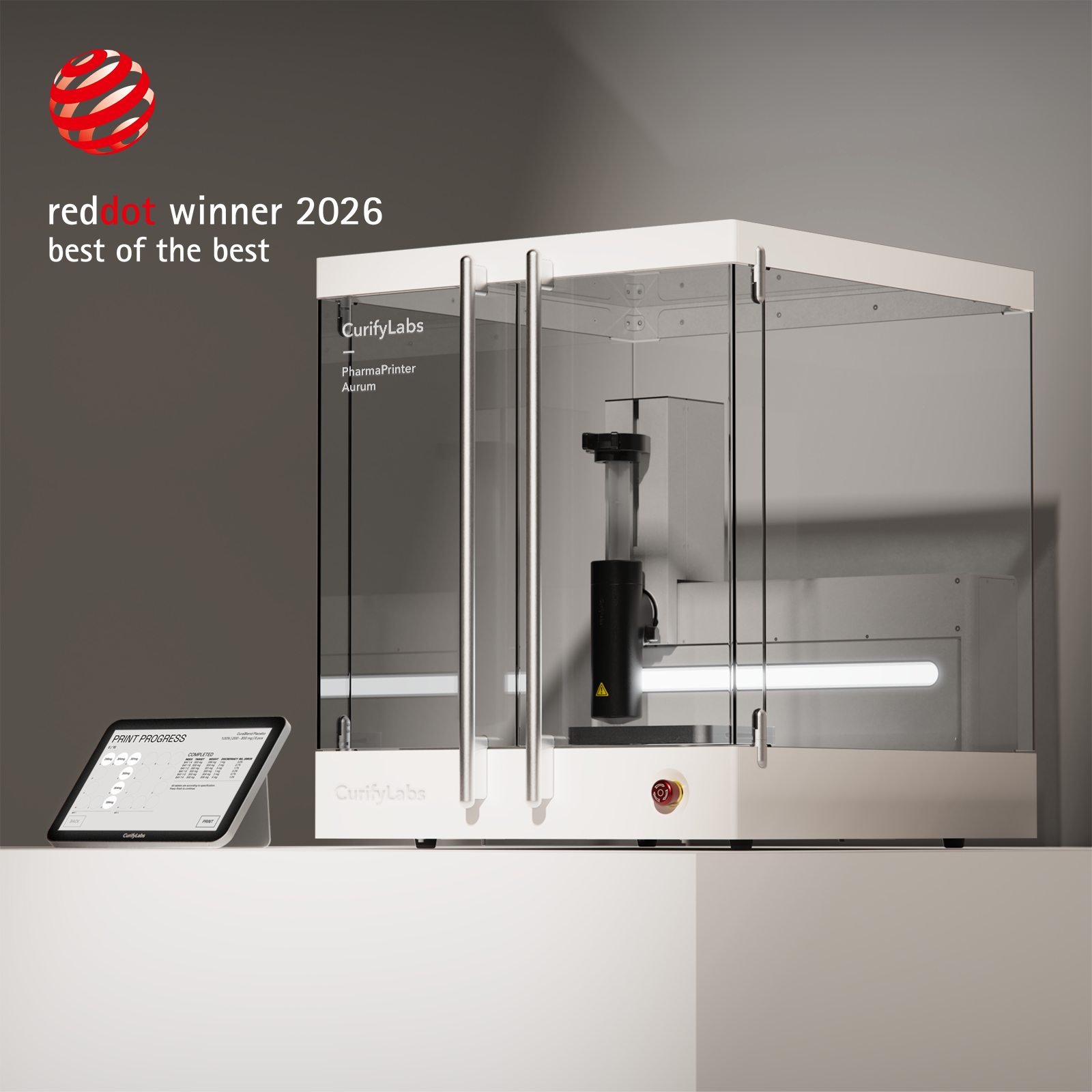
CurifyLabs has been awarded Red Dot: Best of the Best for the PharmaPrinter Aurum, and a Red Dot Award for our blister packaging. Here's what that means to us — and why we think it matters for the future of personalized medicine.
When the email landed, we read it twice.
Not one Red Dot Award. Two. And one of them — for the PharmaPrinter Aurum — carries the distinction of Best of the Best, Red Dot's highest honor, reserved for designs that redefine what's possible in their category.
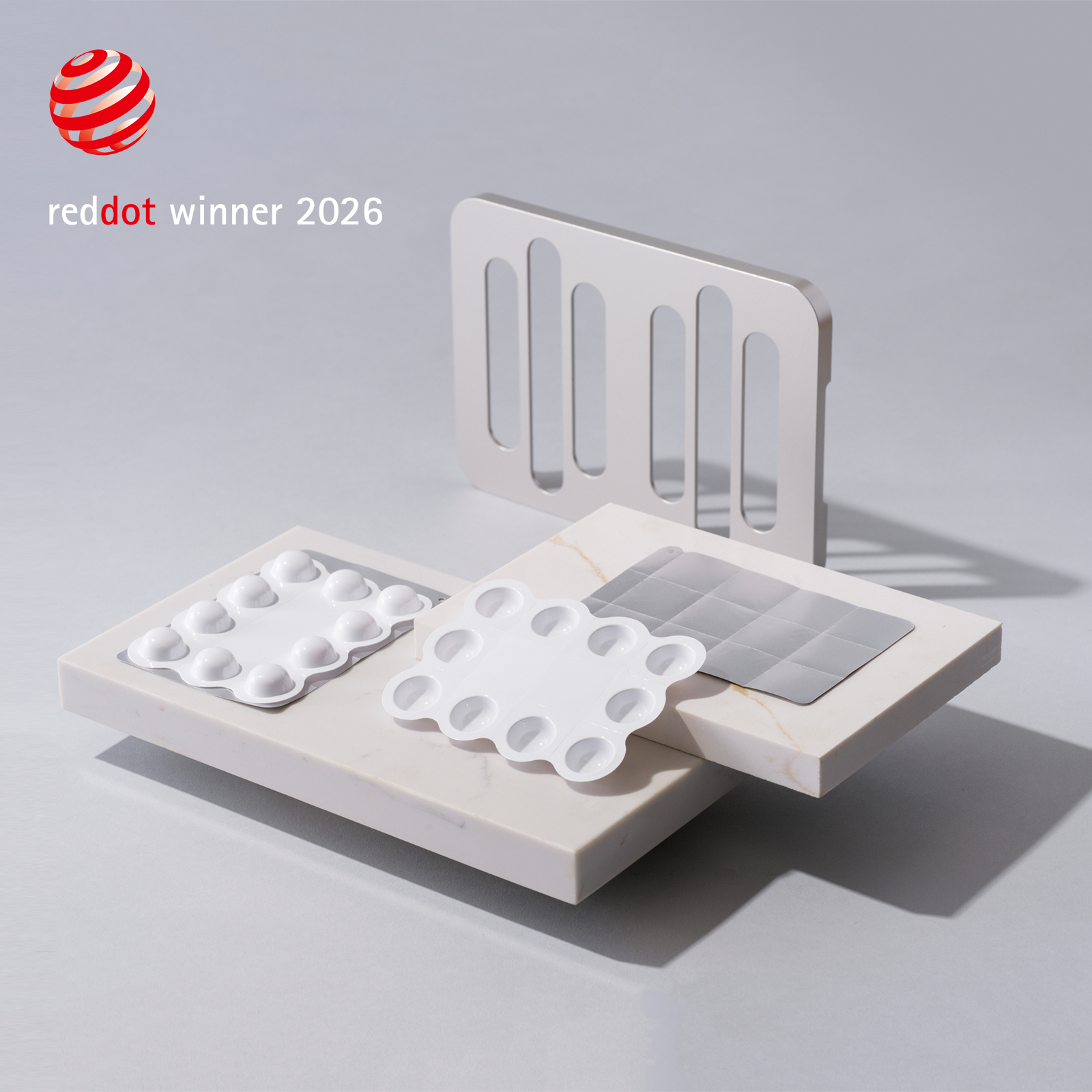
The second, for our blister packaging, sits right alongside it. Because in personalized medicine, no single object carries the full story. The machine matters. The packaging matters. The moment a patient holds their medication matters. All of it, together, is the design.
A quick confession about the name
"Aurum" is Latin for gold. We named the PharmaPrinter Aurum long before we had any idea it would win Red Dot's top prize. So when the Best of the Best announcement came through, let's just say the symbolism was not lost on anyone in the office.
We swear we didn't plan it. (Mostly.)
What the PharmaPrinter Aurum actually is
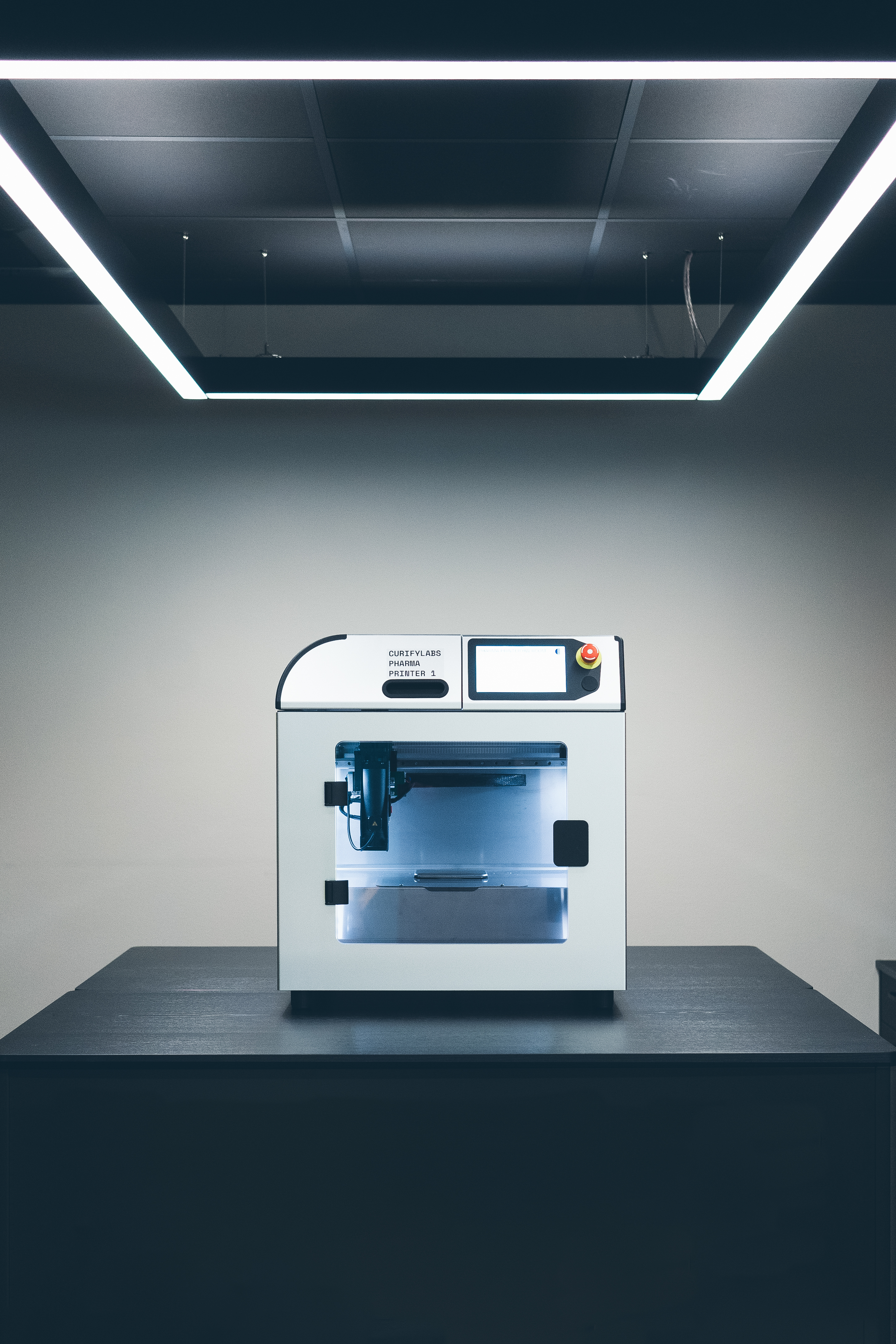
The PharmaPrinter Aurum is a pharmaceutical 3D printing system built for compounding pharmacies and hospitals. It takes the manual, labor-intensive craft of preparing personalized medicines — the kind tailored to a single patient's dose, allergy profile, or swallowing needs — and turns it into something precise, repeatable, and quietly beautiful to operate.
Inside the machine: real pharmaceutical engineering. On the outside: a design philosophy that treats pharmacy technology as something that belongs in the hands of skilled professionals, not hidden away behind intimidating industrial shells.
We wanted it to feel calm. Deliberate. A tool that says "you can trust me" without ever saying a word.
Apparently, the Red Dot jury felt the same way.
Why the blister win matters just as much
It would be easy to tell this story as "the big machine won a big prize, and oh, the packaging came along for the ride." That's not how we see it.
Our blister was designed with the same intent as the printer itself: respect for the person at the end of the chain. Clear dose information. Tactile cues. A form that protects the medicine and the patient's dignity at once.
When a pharmacy makes a personalized medicine, they're producing something that exists for exactly one person. The packaging has to honor that. The Red Dot for our blister is recognition that it does.
Design as a medical-grade responsibility
In consumer products, design sells. In pharma, design protects. A confusing interface, an unclear label, a fiddly mechanism — these aren't aesthetic problems, they're safety ones.
Every choice we made in the Aurum and the blister was first filtered through that lens. Only after safety, clarity, and workflow were solved did we ask the next question: how do we make this genuinely good to use?
The two Red Dots tell us we're on the right track on both counts.
The team behind the dots
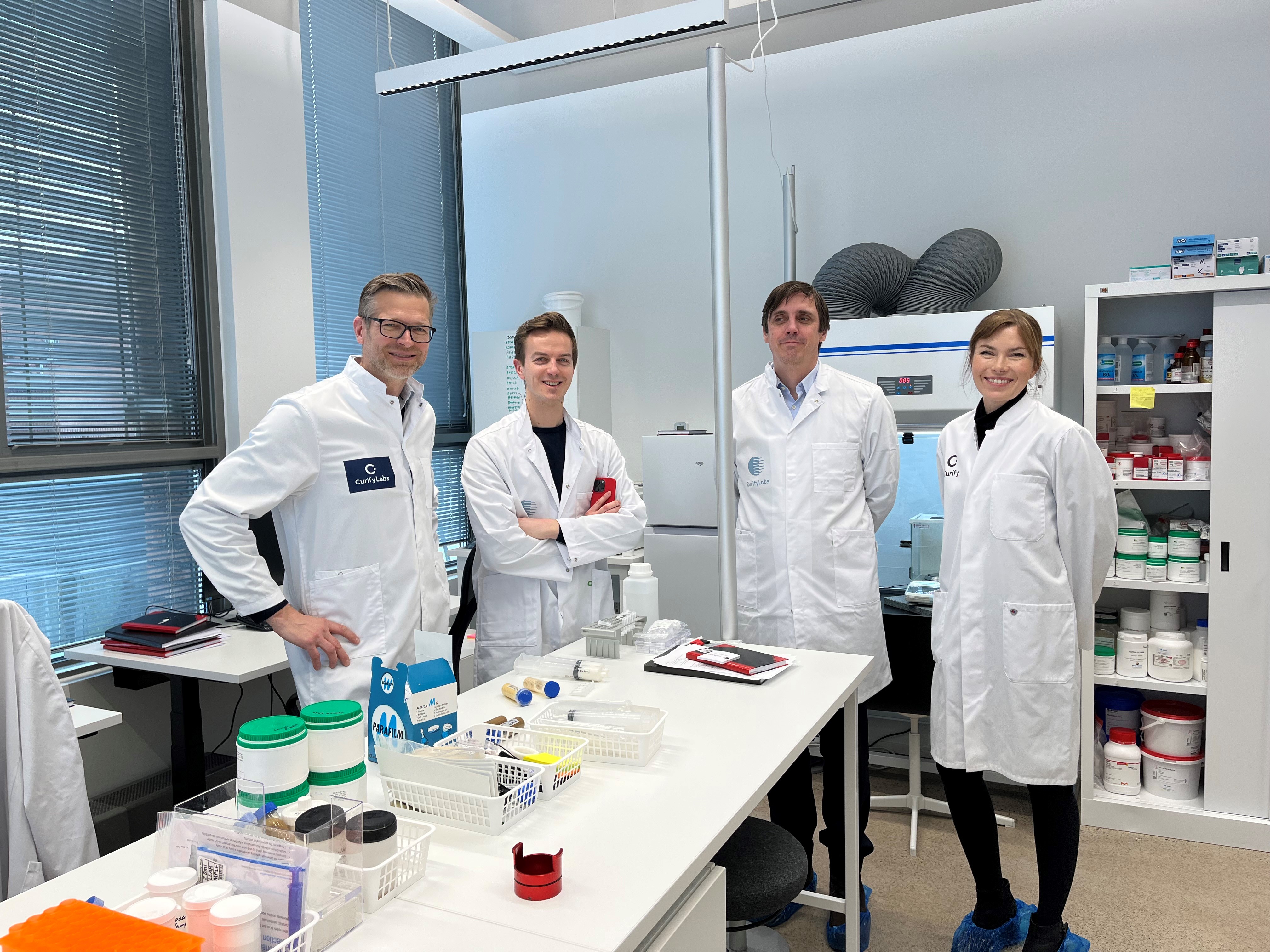
No design award is won by a single person, and ours is no exception. The Aurum and the blister are the work of designers, mechanical engineers, software engineers, pharmacists, regulatory experts, manufacturing partners, and the customers who let us test, iterate, and occasionally start over.
To everyone who poured years of craft into these products: thank you. You made something worth celebrating.
What's next
We'll take a moment — probably with something bubbly — and then we'll get back to work. Personalized medicine is still a frontier, and the tools pharmacies need to practice it well are still being invented. We plan to keep inventing them.
If you're a pharmacy, hospital, or partner thinking about how personalized compounding could work in your setting, we'd love to talk. And if you're someone who cares about how design can quietly improve the way healthcare is delivered — welcome. You're our kind of people.
.png)