
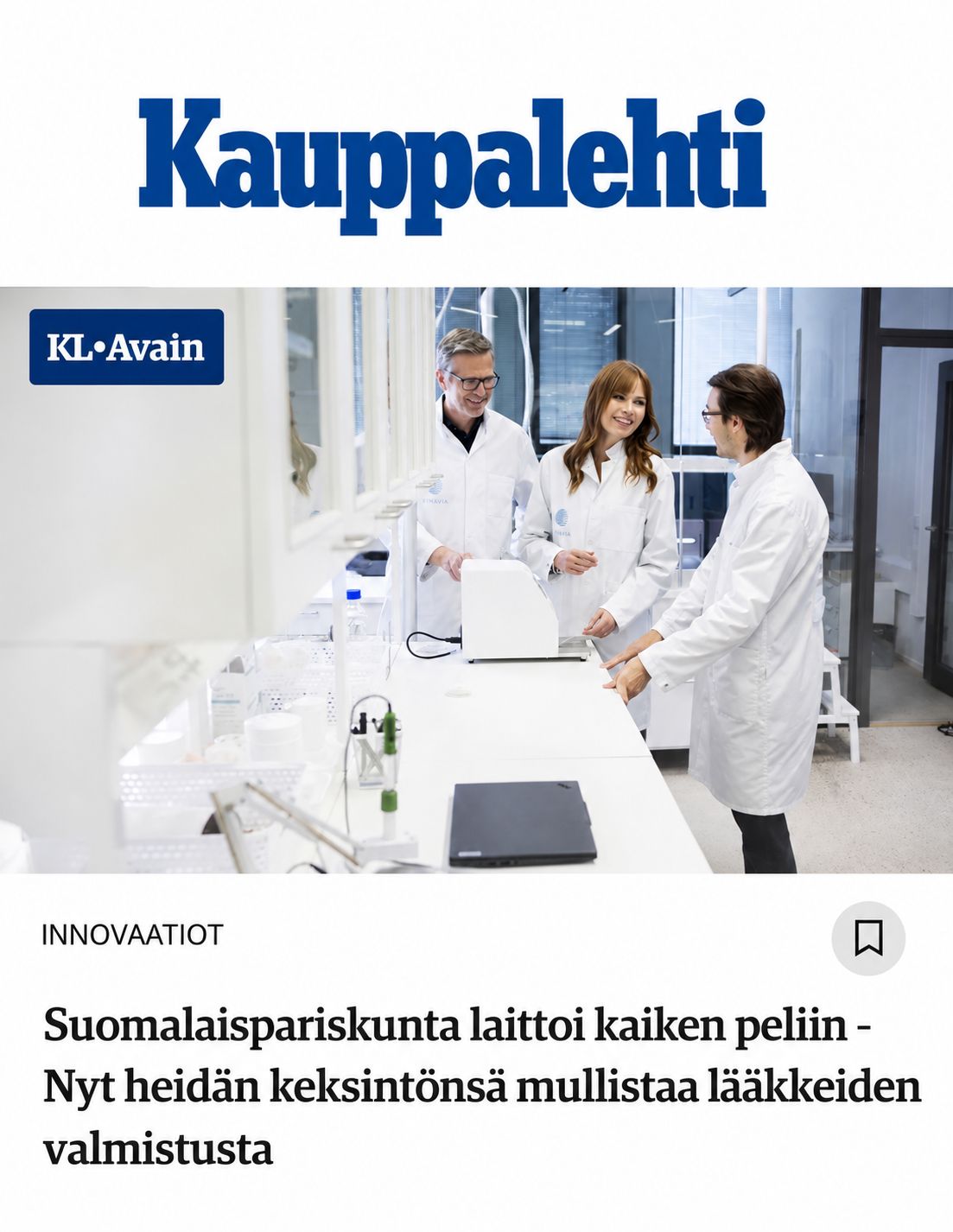
On the Front Page: What a Decade of Printing Medicine Looks Like
This morning, CurifyLabs is on the front page of Kauppalehti. For a company that spends its days thinking about excipient bases, blister packs, and quality assurance, seeing our lab coats next to a headline about the South Korean investment boom is a slightly surreal way to start a Thursday.
We're grateful for it — and we wanted to share a little more of the story behind the photo.
It started with an empty lab and a slightly mad question
What if medicine wasn't mass-produced for the average patient, but made for the actual one in front of you?
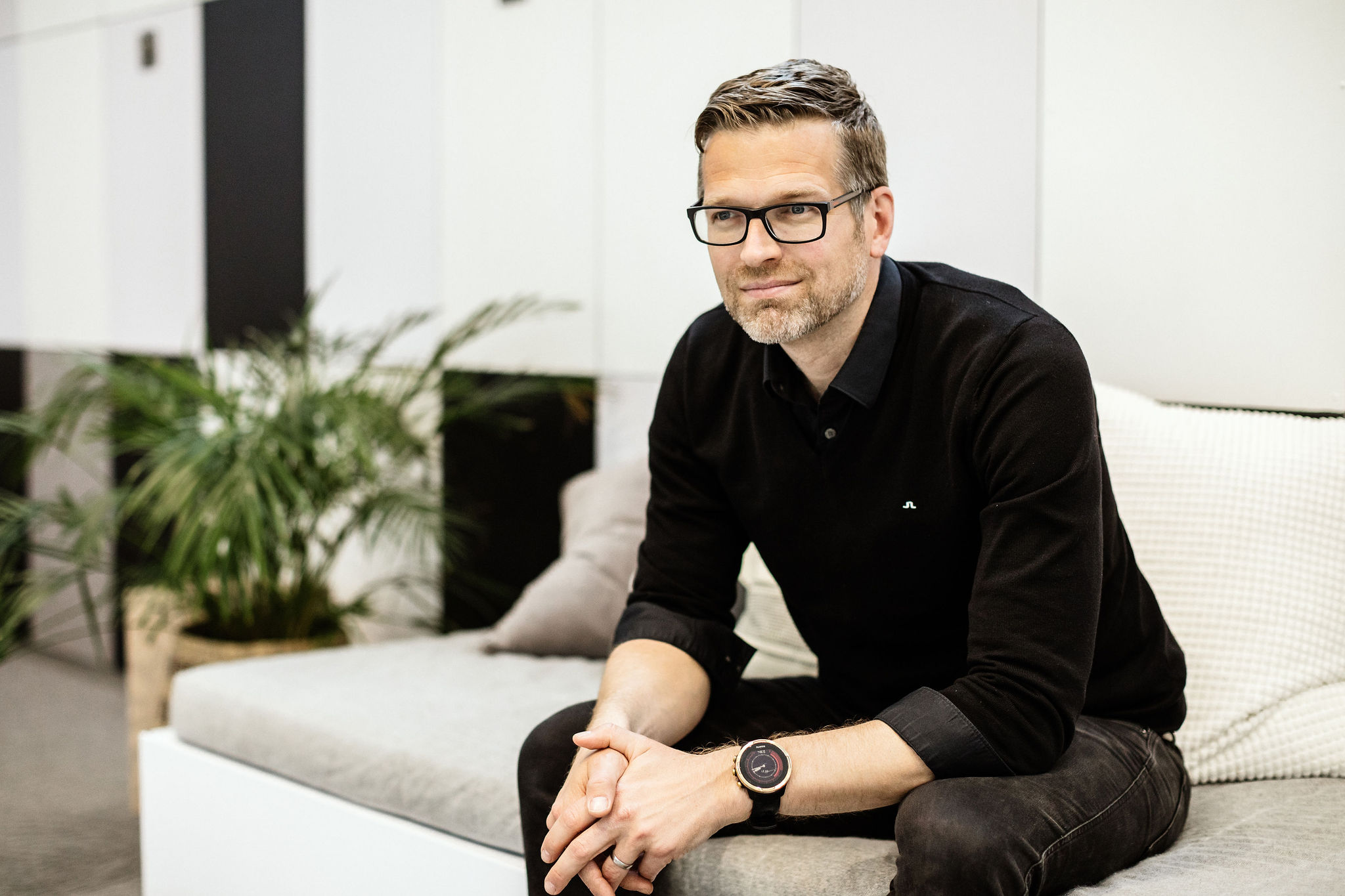
That question has been at the heart of CurifyLabs since before CurifyLabs existed. Our co-founder and CTO, Niklas Sandler, began building the underlying technology from an empty research lab back in 2009. The early tests showed almost immediately that it could work. The hard part was never the science — it was turning a research breakthrough into something a pharmacy or hospital could actually use, day in and day out.
That's the gap our co-founder and CEO, Charlotta Topelius, was brought in to close when the company was founded in 2021. Five years later, the answer to that original question is no longer hypothetical. It's running in labs and pharmacies across 14 countries.
What we actually do
It's easy to call us a "3D-printing company," but that misses the point. The 3D printer is the visible part; the real work is underneath it.
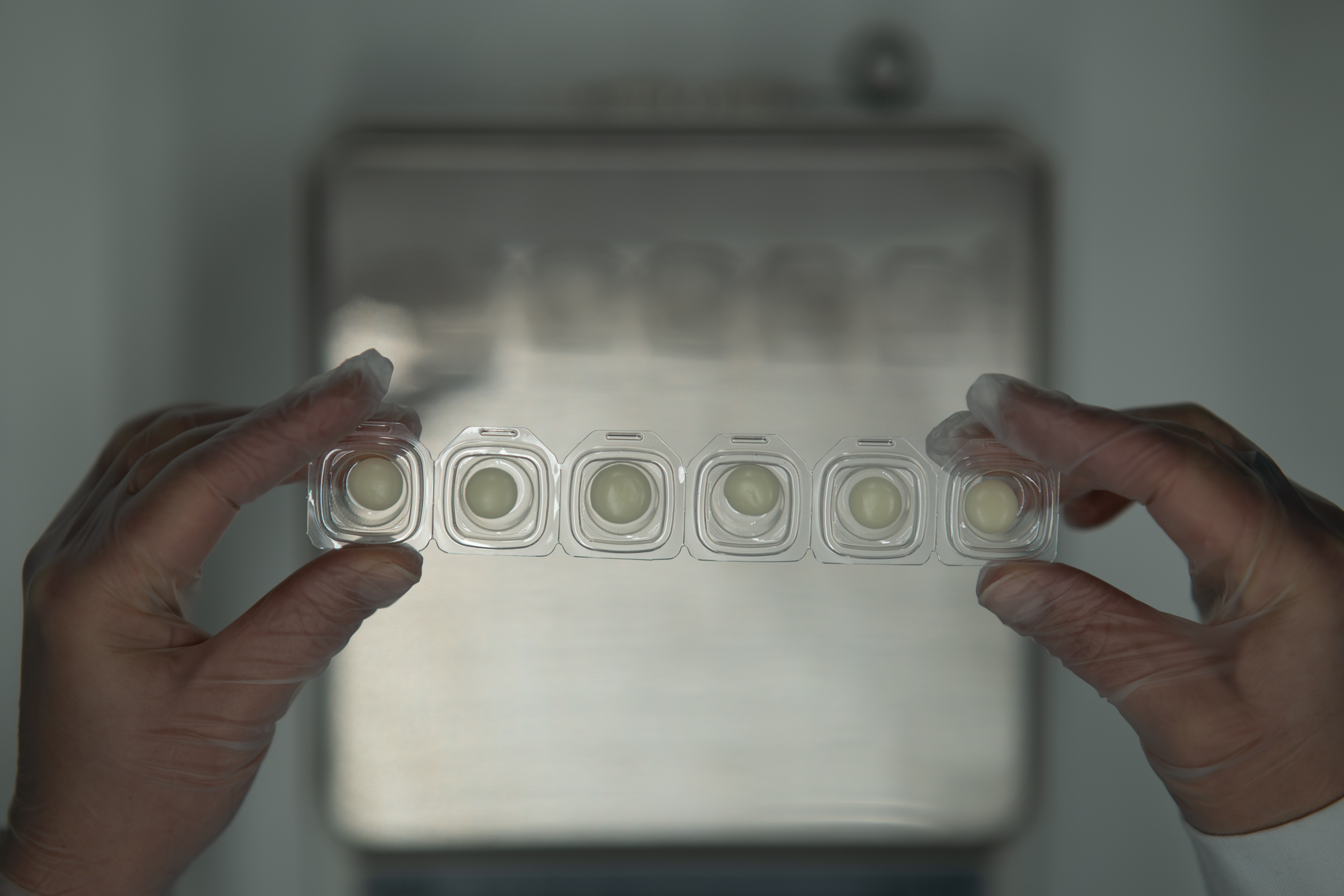
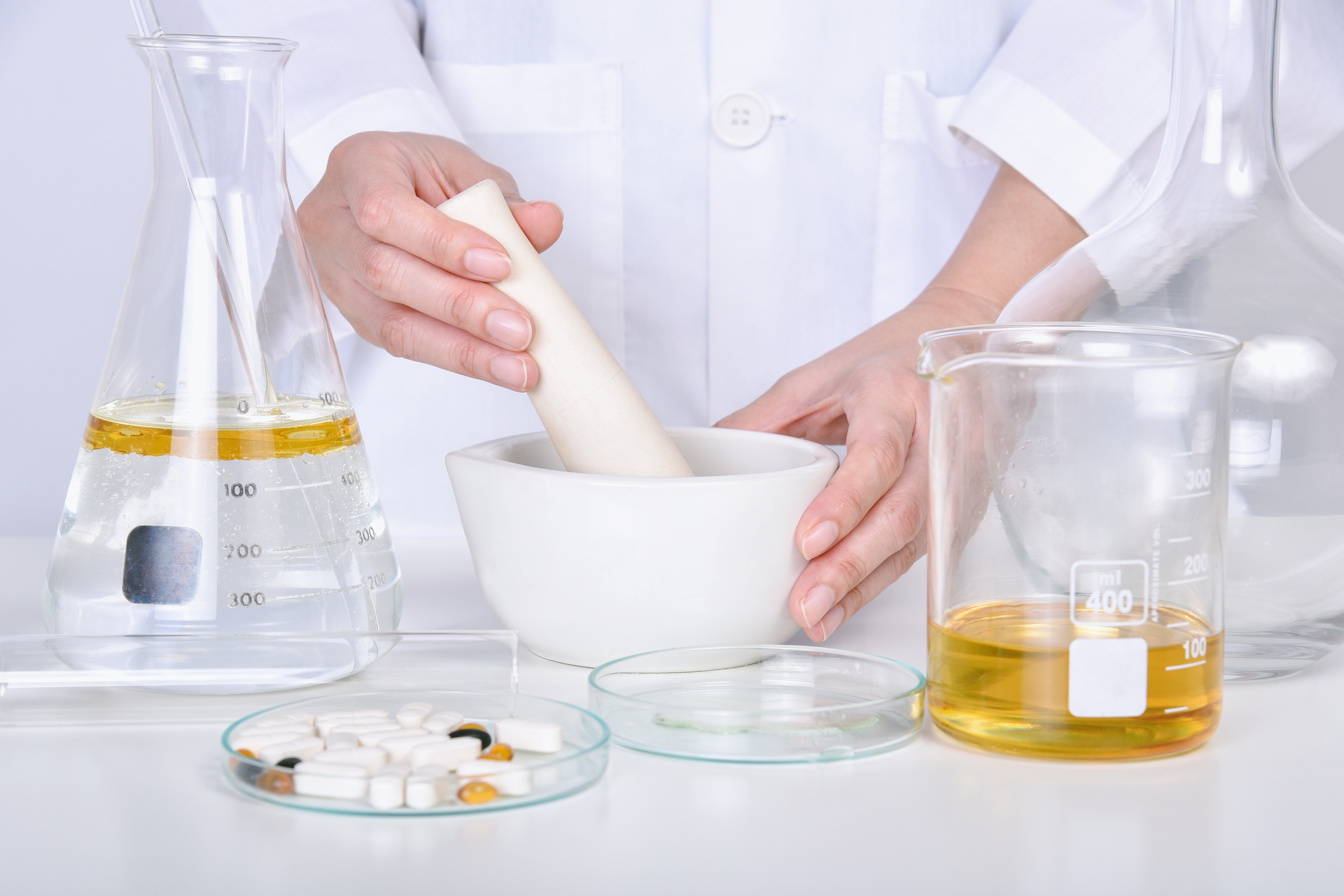
Our technology combines pharmaceutical excipient bases, and software, with quality assurance built directly into robotics rather than left to manual handling. Today, much of the world's ex tempore medicine — drugs compounded individually rather than produced at industrial scale — is still made by hand, using methods that haven't changed much in decades. Hand-compounding leaves room for human error in a setting where errors matter enormously.
Our approach speeds up that process several times over and bakes the quality control in from the start. The goal is simple: the patient should never inherit a mistake.
These personalized medicines matter most exactly where flexibility is hardest to come by — in pediatric care, in oncology, in hormone therapy, and increasingly in the fast-growing field of longevity and healthy aging.
Why the US matters
Over the past year, the clearest sign that this is working has been our growth in the United States. Revenue multiplied as the US market opened up, and a significant share of our business now comes from across the Atlantic. American pharmacies and hospitals have embraced personalized, on-demand medicine production with real enthusiasm — and that early traction is shaping where we go next.
None of that happened overnight. Behind the front-page moment are years of unglamorous, persistent work: the experiments that didn't make it, the regulatory groundwork, the slow building of trust with customers who are, rightly, careful about what they put their name behind.
The part that doesn't fit in a photo
If there's one thing we'd want people to take from the Kauppalehti feature, it's that entrepreneurship in deep tech is mostly resilience. It's showing up for the 90% that never makes it into the press photo — and doing it alongside a team you trust completely.
That team is the real story. Twenty-seven people in our Salmisaari lab in Helsinki, eleven in U.S — turn the science into something patients and pharmacies rely on every single day. The front page belongs to them as much as to anyone.
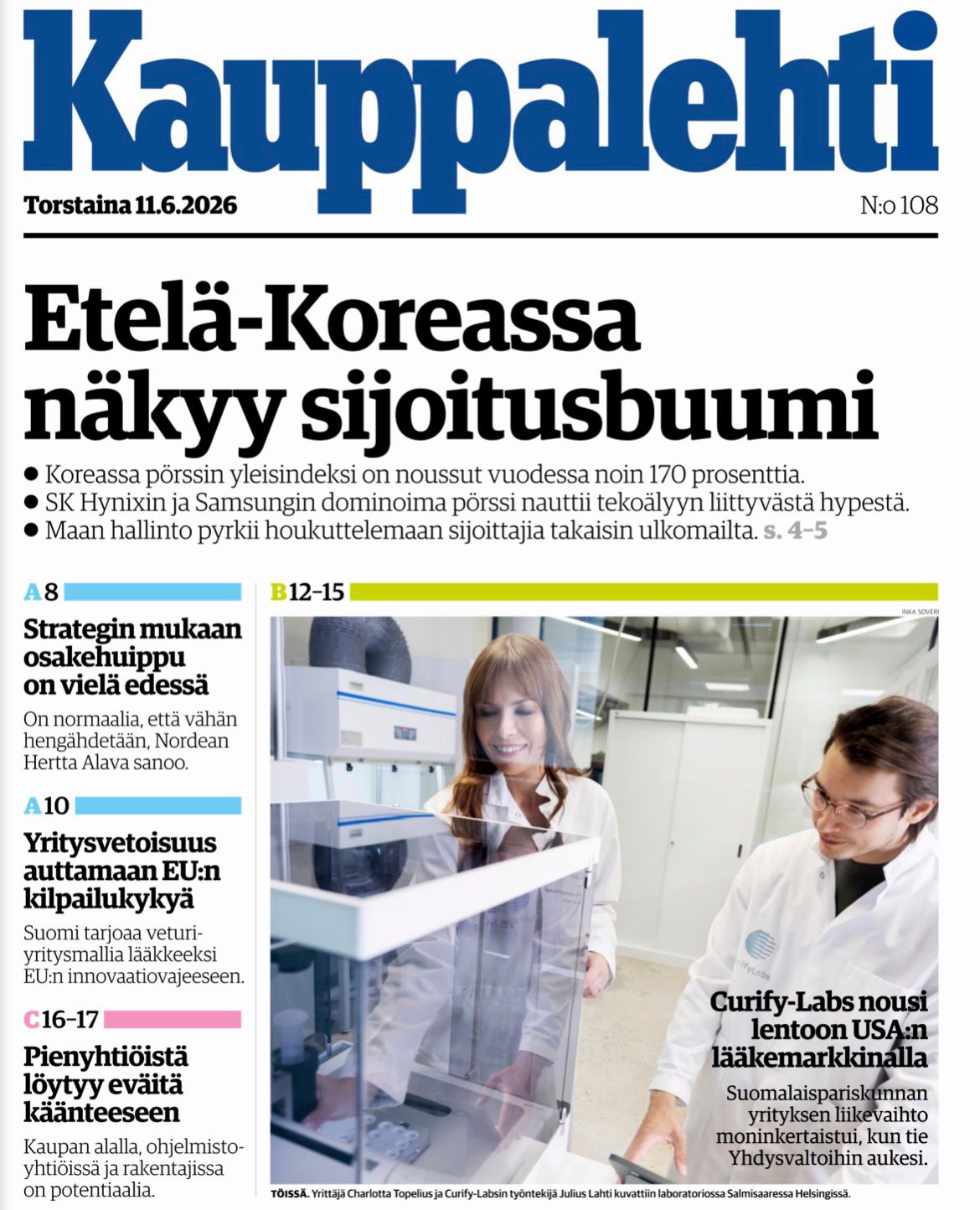
Thank you
A heartfelt thank you to Jenny Jännäri for the thoughtful, generous piece, and to Kauppalehti for the spotlight. The future of medicine isn't only about new molecules — it's about making the right medicine, for the right person, at the right moment.
— The CurifyLabs team
.png)
.png)

.png)